
Jamie Willoughby
Live Poster Session: Zoom Link
Jamie Willoughby
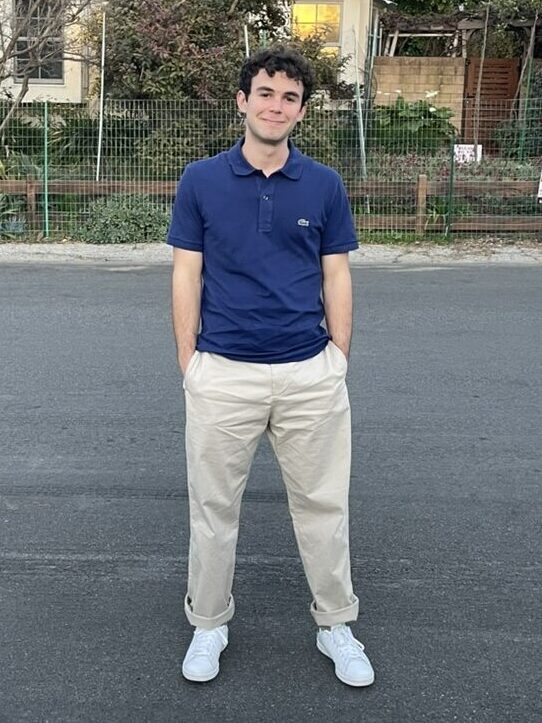
Jamie Willoughby is a junior at Wesleyan University majoring in Molecular Biology and Biochemistry. He is involved in Developmental Biology research on campus.
Abstract: The U.S. suffers disparities in voter participation that undermine certain racial and socioeconomic groups. Various factors have been shown to influence voting involvement, one of which is perception of voter duty. Whether an individual perceives voting as a duty or choice, and how strongly they feel one way or the other, is associated with their their likelihood of ultimately casting a ballot. It is therefore important to understand the circumstances associated with duteous voters. One compelling explanation of differences in perception of voter duty is degree of religious devotion, since worship instills values such as responsibility and community. Using the ANES 2020 Time Series Study, this paper tests whether there is an association between religion, religiosity, and perception of voter duty. Voter perception was described along a seven-point scale, ranging from a strong perception of voting as a choice to a strong perception of voting as a duty. Chi-squared and regression analyses demonstrated that Protestant and Jewish individuals are significantly less likely to perceive voting as a choice, while unreligious individuals are significantly more likely to perceive voting as a choice or have no opinion at all. Meanwhile, highly pious individuals are significantly more likely perceieve voting as a duty. Regression analyses characterized socioeconomic class as a moderator of the relationship between religion and perception of voter duty. The results emphasize the role of religion in fostering obligations to self and community through voting, as well as the differences in voter behavior among religious and socioeconomic sectors.